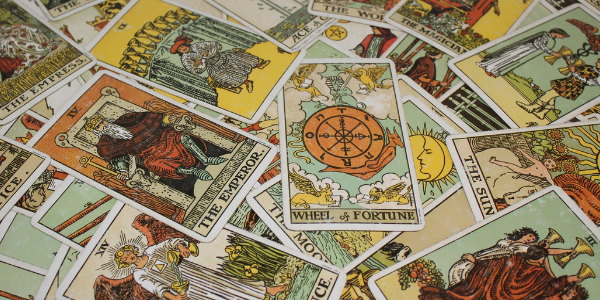
In the realm of divination, tarot stands out as a profound and widely embraced tool, weaving together art, symbolism, and intuition to offer insights into our deepest questions and life paths. But what exactly is tarot, and how can it be both a source of curiosity and controversy? Let’s embark on a journey to explore the essence of tarot, its historical roots, and the multifaceted ways it is interpreted and utilized today.
At its core, tarot is a deck of 78 cards, each rich with symbolism and meaning, used in various cultures for divination, self-reflection, and spiritual guidance. The deck is divided into two main sections: the Major Arcana and the Minor Arcana. The Major Arcana consists of 22 cards that represent life’s significant lessons, spiritual growth, and key turning points. The Minor Arcana, with its 56 cards, reflects everyday challenges and experiences and is further categorized into four suits—Cups, Pentacles, Swords, and Wands. Each card carries deep symbolic meaning, offering guidance on different aspects of life when interpreted in a reading.
The origins of tarot are shrouded in mystery, believed to have emerged in Europe during the late Middle Ages. The earliest tarot decks were crafted in northern Italy around the 15th century, originally serving as a game rather than a tool for divination. It wasn’t until the 18th century that tarot’s association with spiritual insight and fortune-telling began to take root. Over time, the practice evolved from a mere game into a profound method for self-exploration, spiritual growth, and intuitive development.
For many, tarot readings provide valuable benefits, encouraging introspection and offering new perspectives on life situations. The practice supports emotional and psychological well-being by providing comfort, clarity, and guidance during times of uncertainty or stress. Additionally, tarot can serve as a catalyst for creative thinking and problem-solving, as its symbolic language allows individuals to explore challenges from new angles. Whether used as a daily practice or as an occasional source of insight, tarot has the potential to inspire personal growth and deeper self-awareness.
Tarot has often been misunderstood, sometimes viewed with skepticism or labeled as “evil” due to religious or cultural beliefs. However, tarot is simply a tool, and its purpose is determined by the intent of the practitioner. Many people use tarot as a method of self-discovery, much like journaling or meditation. The images and meanings of tarot cards are based on universal archetypes rather than dark forces. Instead of focusing on fear-based predictions, tarot readers often use the cards to offer healing, empowerment, and guidance. While some religious groups may discourage tarot due to its association with divination, many individuals see it as a deeply personal and spiritual tool rather than a mystical or supernatural force.
In tarot, no card is inherently good or bad. Each card carries both light and shadow aspects, depending on context and interpretation. Some cards, like The Sun, the Ten of Cups, and The World, are often associated with positive outcomes such as joy, success, and fulfillment. Others, like The Tower, the Ten of Swords, and Death, are frequently seen as challenging, representing upheaval, transformation, or endings. Rather than categorizing tarot cards in terms of “good” and “bad,” it is more helpful to view each one as part of a greater journey. Every card offers wisdom and insight, guiding individuals toward a deeper understanding of themselves and their experiences rather than predicting an inevitable fate.
Many people consider tarot and oracle cards the same but they are different. Tarot follows a structured system, consisting of 78 cards with Major and Minor Arcana, each with established meanings and historical significance. Oracle cards, on the other hand, do not adhere to a specific framework and vary widely in theme, number of cards, and purpose. While tarot requires more study to fully grasp its symbolism, oracle cards tend to be more intuitive and accessible for beginners. Both tools offer guidance and reflection, but tarot provides a structured, symbolic framework, whereas oracle decks allow for a more fluid and personalized experience.
You may be asking yourself, “Can I learn Tarot?” The resounding answer – Absolutely! Learning to interpret tarot cards requires dedication, practice, and an understanding of both the symbolism of the cards and your intuition. Here’s a step-by-step guide to get started:
- Acquire a Tarot Deck: Choose a tarot deck that resonates with you. There are many different decks available, each with its own artwork, symbolism, and themes. Popular decks include the Rider-Waite-Smith deck, the Thoth deck, and the Marseille deck, among others.
- Study the Cards: Familiarize yourself with the imagery, symbolism, and meanings of each card in the deck. Many tarot decks come with guidebooks that provide explanations of the cards, but there are also numerous resources available online and in books that delve into the meanings of the cards in greater depth.
- Learn Basic Spreads: Start with simple tarot spreads, such as the three-card spread or the Celtic Cross spread. Each spread has a specific layout that determines how the cards are placed and interpreted. Practice using these spreads to gain insight into different aspects of a situation or question.
- Trust Your Intuition: While it’s important to understand the traditional meanings of the cards, don’t be afraid to trust your intuition when interpreting them. Pay attention to your initial impressions, emotions, and instincts when laying out and interpreting the cards.
- Keep a Tarot Journal: Maintain a journal to track your tarot readings, interpretations, and insights. Reflect on the correlations between the cards drawn and your life experiences. Over time, you’ll develop a deeper understanding of the cards and their meanings.
- Practice Regularly: Like any skill, interpreting tarot cards improves with practice. Set aside time each day or week to practice doing readings for yourself or others. The more you practice, the more confident and skilled you’ll become at interpreting the cards.
- Seek Feedback and Guidance: Don’t hesitate to seek feedback and guidance from experienced tarot readers or mentors. Join online tarot communities, attend workshops or classes, or seek out local tarot readers to learn from their expertise and insights.
- Be Patient and Open-Minded: Learning to interpret tarot is a journey that takes time and patience. Be open-minded to new interpretations and perspectives, and trust that with dedication and practice, you’ll continue to deepen your understanding of the cards and your ability to interpret them effectively.
Tarot is a richly layered and multifaceted practice, offering pathways to deeper understanding, introspection, and personal evolution. Its history is a tapestry of cultural shifts, evolving from a card game to a profound tool for divination and self-reflection. Whether approached with curiosity, as a source of creative inspiration, or as a spiritual guide, tarot invites individuals to look within and explore the broader energies at play in their lives. Far from being “evil,” tarot serves as a mirror to the soul, a guide through the complexities of life, and a bridge to deeper understanding.